
Best Padel Racket for Beginners to Intermediate Players (2026 Guide by P.ala)
Buying your first padel racket can feel overwhelming.
A quick search reveals hundreds of options from dozens of brands, all claiming to offer the perfect combination of power, control, comfort, and spin. For someone just getting started—or progressing beyond the beginner stage—it can be difficult to know which features actually matter.
The good news is that you don't need the same racket used by professional players to improve your game.
In fact, most beginners and developing intermediate players improve faster with a racket that prioritizes forgiveness, maneuverability, and control over raw power.
This guide explains exactly what to look for when choosing a beginner-to-intermediate padel racket, common buying mistakes to avoid, and the features that can help you build confidence on the court.
What Makes a Good Beginner-to-Intermediate Padel Racket?
As your technique develops, your racket should help you become more consistent—not punish small mistakes.
A quality beginner-friendly racket should offer:
-
A large sweet spot
-
Comfortable feel on impact
-
Easy maneuverability
-
Good control without sacrificing power
-
Reduced vibration
-
Enough forgiveness for off-center shots
While advanced players may prefer stiff, demanding rackets designed for aggressive attacking play, recreational players usually benefit more from equipment that makes every shot easier to execute.
The goal isn't hitting the hardest smash.
It's making more shots, reducing unforced errors, and building confidence.
Round vs. Hybrid vs. Diamond: Which Shape Is Best?
One of the biggest differences between padel rackets is their shape.
Round
Round rackets place the sweet spot near the center of the face, making them the easiest style to control.
They're generally recommended for:
-
New players
-
Recreational players
-
Defensive players
-
Tennis players learning padel
Benefits include:
-
Larger sweet spot
-
Better control
-
More forgiveness
-
Easier volleys
-
Greater consistency
Hybrid (Teardrop)
Hybrid rackets balance control and power.
They suit players who have developed reliable technique and want a little more attacking potential without giving up forgiveness.
Many intermediate players eventually transition to this style.
Diamond
Diamond-shaped rackets are designed primarily for advanced players.
Their higher balance point creates more power but demands excellent timing and technique.
For most beginners, they can actually make the game more difficult.
Recommendation: If you're just starting or have been playing for less than two years, a round or balanced hybrid racket is usually the smartest choice.
Choosing the Right Weight
Weight affects nearly every aspect of how a racket feels.
A racket that's too heavy can slow your reactions and increase fatigue during longer matches.
Most beginner and intermediate players feel comfortable with rackets weighing approximately 350–365 grams, although personal preference also plays a role.
Benefits of a lighter racket include:
-
Faster reactions at the net
-
Less wrist and shoulder fatigue
-
Easier defensive shots
-
Better maneuverability
-
Greater confidence during fast exchanges
A well-balanced lightweight racket allows players to swing naturally while maintaining stability on contact.
Why the Sweet Spot Matters
The sweet spot is the area of the racket that produces the cleanest and most controlled contact with the ball.
No player—even professionals—hits the exact center every time.
That's why beginners should prioritize a racket with a generous sweet spot.
A larger sweet spot provides:
-
More forgiving shots
-
Better consistency
-
Improved depth control
-
Greater confidence
-
Fewer mishits
As your technique develops, you'll naturally become more accurate, but a forgiving racket can make the learning process much more enjoyable.
Carbon Fiber vs. Fiberglass
The face material significantly affects how a racket feels.
Fiberglass
Fiberglass is generally softer and more flexible.
Advantages include:
-
Comfortable feel
-
Easier power
-
Greater forgiveness
-
Excellent choice for beginners
Carbon Fiber
Carbon fiber is stiffer and offers greater precision.
Advantages include:
-
Better durability
-
Improved responsiveness
-
More control
-
Increased stability
Many modern rackets combine different carbon fiber constructions with softer cores to achieve an ideal balance of comfort and performance.
Soft EVA vs. Hard EVA Core
Inside every padel racket is a foam core, most commonly EVA.
Soft EVA
-
More comfortable
-
Better shock absorption
-
Easier power
-
Excellent for recreational players
Medium EVA
-
Balanced feel
-
Good control
-
Versatile performance
Hard EVA
-
Maximum precision
-
Greater power potential
-
Best suited for experienced players
For most developing players, a softer or medium-density core creates a more forgiving experience.
Balance Point Explained
Another important specification is balance.
Low Balance
-
Easier to maneuver
-
Better control
-
Less arm fatigue
Medium Balance
-
Balanced control and power
-
Popular among intermediate players
High Balance
-
More power
-
Slower handling
-
Requires stronger technique
Players still refining their mechanics generally benefit from lower or medium balance.
Features That Help You Improve
Beyond shape and weight, several design features can make a noticeable difference.
Lightweight Construction
A lighter frame promotes faster reactions during volleys and defensive play while reducing fatigue during longer matches.
Large Sweet Spot
A forgiving hitting area increases consistency and confidence.
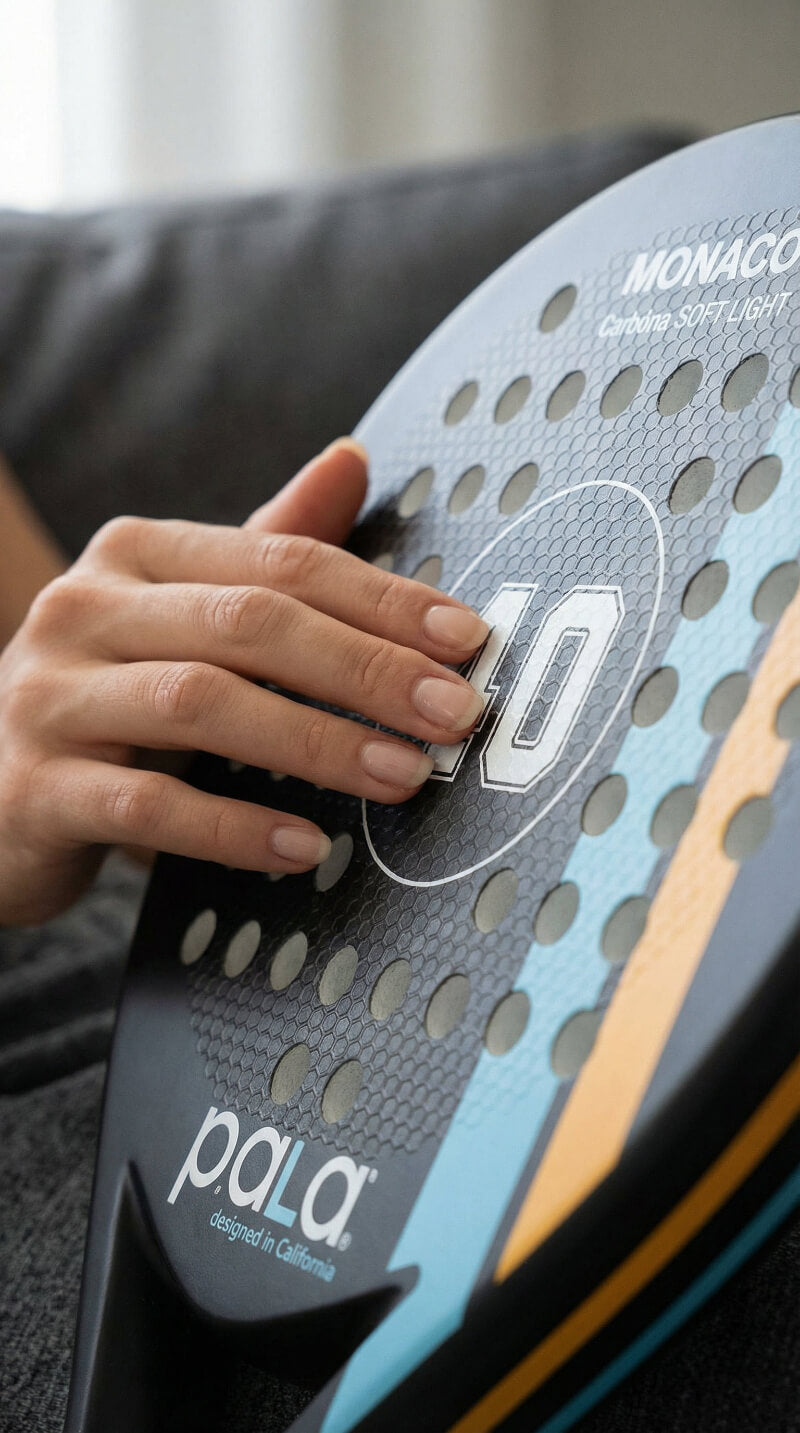
Textured Face
A textured hitting surface increases friction between the racket and ball, making it easier to generate slice and topspin once your technique develops.
Comfortable Wrist Strap
A secure wrist strap keeps the racket safely attached while improving confidence during aggressive swings.
Why P.ala Designed Its Rackets Differently
At P.ala Padel USA, every racket is designed in California with one goal: helping players enjoy the game while continuing to improve.
Rather than building equipment exclusively for elite professionals, our design philosophy focuses on the needs of recreational and developing players.
Several features distinguish our rackets:
-
Lightweight construction for easier handling
-
A generous sweet spot that promotes consistency
-
A textured 3D surface to support spin development
-
Comfortable wrist straps for extended play
-
A unique hole-free center design that creates a more consistent hitting surface in the primary contact zone
These design choices are intended to help players develop confidence while enjoying every match.
Common Mistakes Beginners Make
Many players unknowingly buy equipment that's too advanced.
Avoid these common mistakes:
-
Choosing a racket based only on professional endorsements
-
Buying the heaviest model available
-
Prioritizing power over control
-
Ignoring balance and maneuverability
-
Assuming expensive automatically means better
The best racket is the one that matches your current skill level.
Is an Expensive Racket Worth It?
Not necessarily.
Professional-level rackets are engineered for players with exceptional timing and fast swing speeds.
If you're still developing consistency, a forgiving racket will usually improve your performance more than a demanding power model.
The right racket should make padel easier—not harder.
Who Should Choose a P.ala Racket?
P.ala rackets are designed for:
-
First-time padel players
-
Intermediate players looking to improve
-
Tennis players transitioning to padel
-
Pickleball players exploring a new racquet sport
-
Recreational competitors
-
Players seeking lightweight comfort and balanced performance
Whether you play once a week or several times each week, choosing equipment that complements your current ability can make every session more enjoyable.
Tips to Improve Faster
Equipment matters, but good habits matter even more.
Focus on:
-
Relaxing your grip
-
Moving your feet before every shot
-
Prioritizing placement over power
-
Practicing volleys regularly
-
Learning proper court positioning
-
Playing with partners slightly better than you
-
Taking lessons whenever possible
The right racket supports these habits by making every shot feel more predictable.
Final Thoughts
The best beginner-to-intermediate padel racket isn't the one with the most aggressive marketing or the highest price tag.
It's the racket that helps you play with confidence, improve your consistency, and enjoy spending time on the court.
When choosing a racket, prioritize:
-
Shape
-
Weight
-
Balance
-
Materials
-
Sweet spot
-
Comfort
-
Forgiveness
As your game evolves, your equipment should continue supporting your development—not making it more difficult.
At P.ala Padel USA, we've built our California-designed rackets around these principles, combining thoughtful engineering with features that help recreational and improving players enjoy every match.
Whether you're buying your very first racket or moving into the intermediate level, selecting equipment that matches your current stage of development is one of the smartest investments you can make in your game.
Frequently Asked Questions
What is the best padel racket shape for beginners?
Round rackets are generally the easiest to use because they offer a larger sweet spot, excellent control, and greater forgiveness on off-center shots.
Is a lightweight padel racket better?
For many beginners and intermediate players, yes. Lightweight rackets improve maneuverability, reduce fatigue, and help players react faster at the net.
Should beginners choose carbon fiber or fiberglass?
Fiberglass typically offers a softer feel and greater forgiveness, while carbon fiber provides more precision and durability. Many modern rackets blend these characteristics to create balanced performance.
Does a textured surface really help with spin?
Yes. A textured face increases friction between the racket and ball, making it easier to generate slice and topspin as your technique improves.
What is the ideal weight for a beginner?
Most recreational players are comfortable with rackets in the 350–365 gram range, although the best choice depends on strength, playing style, and personal preference.
How long does a padel racket last?
With proper care, a quality padel racket can last several years for recreational players. Avoid exposing it to extreme heat, impacts with glass or fencing, and prolonged moisture to maximize its lifespan.
When should I upgrade my racket?
Once your technique becomes consistent and you begin wanting more specialized control or power, it may be time to consider a racket designed for advanced play. Until then, a forgiving beginner-to-intermediate racket will often help you improve more effectively.
Leave a comment
All comments are moderated before being published.
This site is protected by hCaptcha and the hCaptcha Privacy Policy and Terms of Service apply.